
AI calling has become an increasingly practical solution for businesses that want to answer more calls, follow up with leads faster, reduce repetitive work, and improve customer communication.
However, not every AI calling workflow serves the same purpose.
Some AI voice agents are designed to answer calls from customers and prospects. Others are built to place calls for lead follow-up, appointment reminders, customer re-engagement, or feedback collection. These two categories are known as inbound AI calling and outbound AI calling.
Both can support business growth, but they solve different problems.
Inbound AI calling helps businesses respond when people contact them. Outbound AI calling helps businesses proactively contact customers, prospects, or approved leads.
Understanding the difference between the two can help a company choose the right starting point, build more effective call workflows, and avoid investing in automation that does not match its operational needs.
What Is Inbound AI Calling?
Inbound AI calling refers to calls initiated by customers, leads, or other people contacting a business.
An AI voice agent answers the incoming call and follows a predefined workflow based on what the caller needs.
The agent may:
- Greet the caller
- Identify the reason for the call
- Answer common questions
- Collect customer information
- Qualify an enquiry
- Book an appointment
- Route the call to a team member
- Create a callback request
- Record a call summary
- Update a connected calendar or CRM
Inbound AI calling is mainly focused on responsiveness, customer support, and call handling efficiency.
It is useful for businesses that miss calls, receive frequent booking requests, answer repetitive questions, or need a consistent way to route customers.
What Is Outbound AI Calling?
Outbound AI calling refers to calls initiated by the business through an AI voice agent.
These calls are made for a specific approved purpose, such as following up with leads, confirming appointments, reconnecting with previous customers, or collecting feedback.
An outbound AI voice agent may:
- Contact a new lead
- Confirm interest in a service
- Ask qualification questions
- Schedule a sales conversation
- Confirm an upcoming appointment
- Offer rescheduling options
- Follow up after a quote
- Reconnect with inactive customers
- Conduct a feedback call
- Record the outcome in a CRM
Outbound AI calling is mainly focused on proactive communication, follow-up, sales support, retention, and operational reminders.
It is useful for businesses that have large contact lists, slow follow-up processes, missed appointments, or sales teams spending too much time on repetitive calls.
The Main Difference Between Inbound and Outbound AI Calling
The clearest difference is who starts the conversation.
With inbound AI calling, the customer contacts the business.
With outbound AI calling, the business contacts the customer or lead.
This difference affects the entire workflow, including the opening message, business objective, information collected, legal considerations, and desired outcome.
An inbound caller usually already has a reason to contact the business. The AI voice agent must quickly understand that reason and provide the correct next step.
An outbound recipient may not be expecting the call. The AI voice agent must clearly identify the purpose, communicate appropriately, and make it easy for the person to continue, decline, or opt out where required.
Common Inbound AI Calling Use Cases
Inbound AI calling can support many customer-facing operations.
1. Answering New Customer Enquiries
A prospect may call after finding the company online, seeing an advertisement, or receiving a recommendation.
The AI voice agent can ask what service the person needs, collect their details, answer common questions, and direct them toward a booking or quote request.
This can help businesses respond even when employees are unavailable.
2. Appointment Booking
The AI voice agent can identify the required service, check calendar availability, offer suitable time slots, and confirm the booking.
This can reduce scheduling workload and allow customers to complete the process during a single call.
3. Smart Call Routing
Instead of asking callers to press buttons, the AI voice agent can ask what they need.
A sales enquiry can be routed to sales, a service issue can be directed to support, and an appointment request can move into an automated booking workflow.
4. Frequently Asked Questions
Inbound callers often ask about business hours, service areas, availability, pricing, required documents, or appointment policies.
The AI agent can provide approved information consistently and transfer the call when the question requires human assistance.
5. After-Hours Call Handling
Calls may arrive outside normal business hours.
An AI voice agent can collect an enquiry, create a callback request, answer basic questions, or book an appointment without requiring an employee to remain available.
6. Existing Customer Support
The AI voice agent can identify an existing customer, collect information about the issue, and route the call to the appropriate person.
For simple enquiries, it may provide an approved response without needing a transfer.
Businesses exploring inbound answering, appointment booking, routing, and support workflows can review the available AI voice agent services.
Common Outbound AI Calling Use Cases
Outbound AI calling supports proactive communication and structured follow-up.
1. New Lead Follow-Up
When someone submits an enquiry, the AI voice agent can contact the lead shortly afterward.
It can confirm interest, gather additional information, and schedule a conversation with a salesperson.
This can reduce the delay between lead generation and first contact.
2. Lead Qualification
Sales teams may spend significant time contacting people who are outside the service area, have no immediate need, or are not suitable for the offer.
An AI voice agent can ask approved qualification questions before a human representative becomes involved.
The answers may be used to categorise the lead, assign a priority, or determine the correct next step.
3. Appointment Confirmations
The AI voice agent can call customers before an appointment and ask whether they still plan to attend.
The customer may confirm, cancel, or request another time.
This can help businesses identify changes earlier and make better use of their schedule.
4. Quote and Proposal Follow-Up
Potential customers may receive a quote but never respond.
An outbound AI voice agent can follow up, confirm whether the person reviewed the proposal, ask if they have questions, or arrange a call with the sales team.
5. Customer Re-Engagement
Businesses often have inactive customers or older leads that have not been contacted recently.
AI calling can support approved re-engagement campaigns by checking whether the contact is still interested, needs another service, or wants to speak with a team member.
6. Customer Feedback
After a service is completed, the AI voice agent can call the customer and ask a short set of feedback questions.
Responses can be summarised and negative experiences can be flagged for human follow-up.
7. Renewal and Service Reminders
Businesses can use outbound AI calling to remind customers about renewals, maintenance, service dates, account reviews, or other time-sensitive actions.
Inbound AI Calling Benefits
Inbound AI calling is valuable when the main problem is missed or poorly managed incoming calls.
Key benefits may include:
- Faster customer response
- Fewer missed enquiries
- Reduced time on hold
- More consistent call handling
- Easier appointment booking
- Better call routing
- Improved after-hours coverage
- Structured callback requests
- Lower pressure on front-desk staff
- More complete caller information
A business that receives frequent calls but has limited staff may see immediate operational value from inbound automation.
Outbound AI Calling Benefits
Outbound AI calling is valuable when the main problem is slow, inconsistent, or expensive follow-up.
Key benefits may include:
- Faster lead contact
- More consistent follow-up
- Better lead qualification
- Increased appointment confirmations
- Reduced repetitive dialling
- More structured call outcomes
- Easier customer re-engagement
- Scalable feedback collection
- Better use of sales staff
- Improved CRM records
A business with a large lead database or many scheduled appointments may benefit more from outbound automation.
Which Type of AI Calling Should a Business Choose First?
The right starting point depends on where the biggest communication gap exists.
A business should consider inbound AI calling first when:
- Calls are frequently missed
- Customers wait too long for answers
- Employees are interrupted by routine enquiries
- Appointment scheduling takes too much time
- Calls need better routing
- After-hours enquiries are common
- Voicemails are not handled consistently
A business should consider outbound AI calling first when:
- New leads receive slow follow-up
- Sales representatives spend too much time dialling
- Appointment no-shows are common
- Old leads and customers are not being re-engaged
- Quotes are not followed up consistently
- Feedback collection is irregular
- Customer reminders require too much manual work
Some businesses need both.
For example, a clinic may use inbound AI calling for appointment booking and outbound AI calling for confirmation reminders. A home-service company may use inbound AI calling for quote requests and outbound AI calling for lead qualification and scheduling.
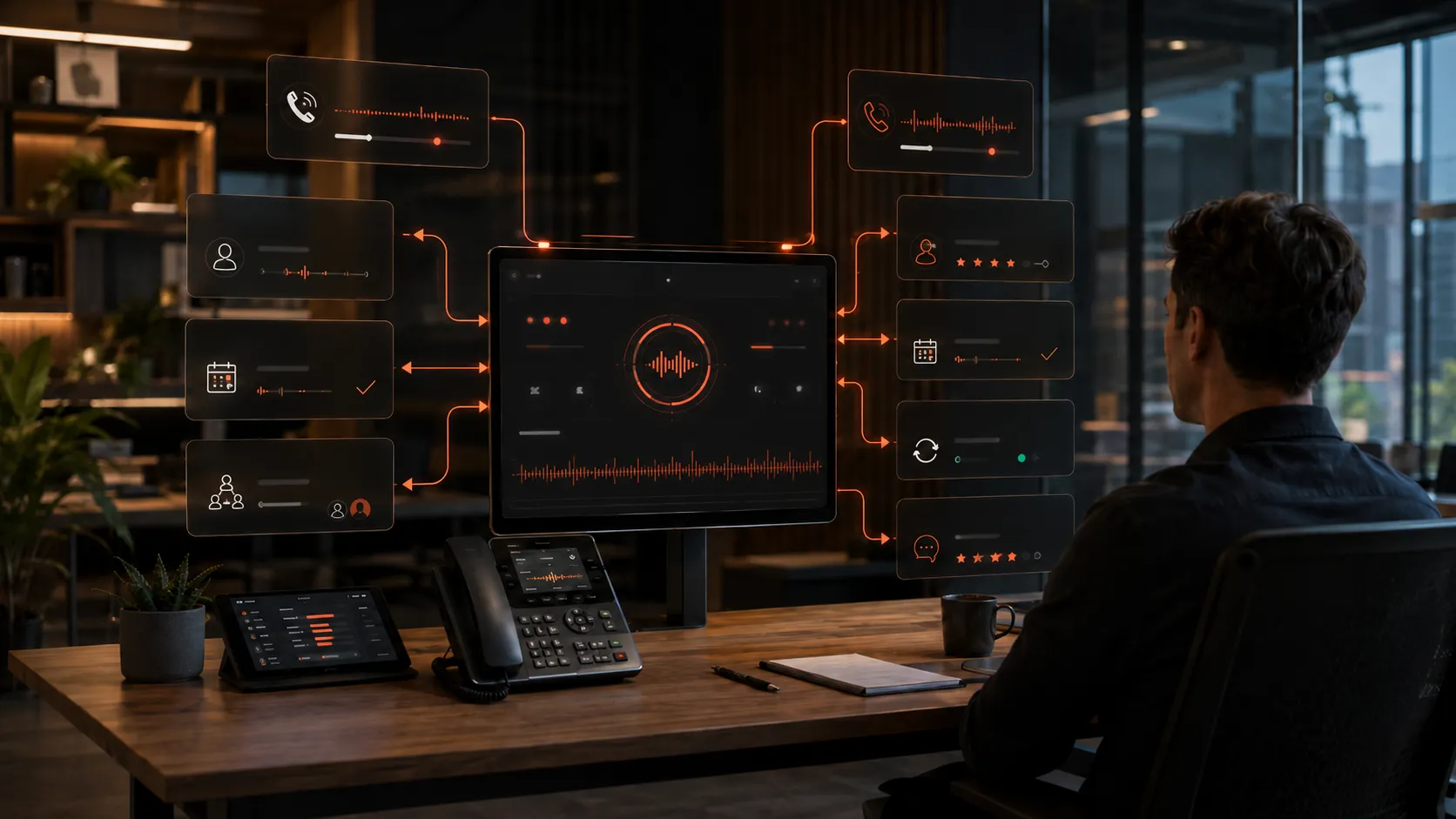
Inbound and Outbound Workflows Can Work Together
The strongest AI calling systems often combine inbound and outbound workflows.
A potential customer may first contact the business through an inbound call. The AI voice agent collects the person’s details and identifies the required service.
If the caller is not ready to book immediately, the information may be added to a follow-up workflow. An outbound AI voice agent can later contact the person, answer another approved question, or help schedule the appointment.
Similarly, an outbound reminder call may lead to a customer calling back. The inbound system should recognise the reason for the call and guide the customer to the correct next step.
This connected approach can create a more complete customer communication process.
Differences in Call Flow Design
Inbound and outbound AI calls should not use the same script structure.
An inbound call flow usually begins with an open question such as:
“How can I assist you today?”
The caller has initiated the conversation, so the workflow should quickly identify the caller’s intention.
An outbound call flow should begin with a clear introduction and purpose.
The agent may explain which business is calling, why the call is being made, and what action is being requested.
The outbound workflow should also account for situations such as:
- The person is unavailable
- The number belongs to someone else
- The recipient is not interested
- The recipient wants to opt out
- The person asks for a human
- The call reaches voicemail
- The recipient requests another call time
These situations require clear instructions and careful testing.
Compliance Considerations
Businesses must consider legal and regulatory requirements before using inbound or outbound AI calling.
Outbound calls, particularly marketing or promotional calls, may be subject to stricter requirements than general inbound customer service calls.
Depending on the location and purpose of the call, businesses may need to address:
- Prior consent
- Do Not Call lists
- Opt-out requests
- Permitted calling hours
- Caller identification
- Automated or AI voice disclosures
- Call recording consent
- Data protection requirements
- Contact-list sourcing
- Industry-specific rules
The business is responsible for confirming that its intended calls, contact data, scripts, disclosures, and recording practices comply with applicable requirements.
AI calling should not be treated as a way to avoid communication or telemarketing rules.
Human Escalation Is Important for Both
Neither inbound nor outbound AI calling should operate without appropriate escalation rules.
An inbound caller may need a human because the question is complex, the customer is dissatisfied, or the request falls outside the knowledge base.
An outbound recipient may request a salesperson, ask a detailed question, or raise an objection that requires human judgment.
The AI voice agent should know when to:
- Transfer the call
- Schedule a callback
- Create a support ticket
- Send a summary to a team member
- End the call respectfully
- Flag the conversation for review
The goal is not to prevent human contact. It is to use human time where it creates the most value.
Measuring Inbound and Outbound Performance
Businesses should measure each type of calling differently.
Useful inbound metrics may include:
- Total incoming calls
- Answer rate
- Missed call reduction
- Appointments booked
- Calls routed successfully
- Questions resolved
- Human transfers
- Average handling time
- Caller drop-off points
Useful outbound metrics may include:
- Calls attempted
- Answer rate
- Qualified leads
- Appointments confirmed
- Follow-ups completed
- Opt-out rate
- Transfers to sales
- Successful re-engagement
- Call outcome distribution
These insights can help a business improve scripts, timing, routing rules, and qualification questions.
Choosing the Right Plan and Setup
The right AI calling solution depends on several factors:
- Monthly call volume
- Number of inbound workflows
- Number of outbound campaigns
- Required languages
- Appointment-booking needs
- CRM and calendar integrations
- Team routing structure
- Reporting requirements
- Expected business growth
A small company may begin with two basic workflows, such as inbound answering and appointment booking.
A growing business may need several workflows for sales, support, reminders, and lead qualification.
A high-volume operation may require unlimited workflows, multiple languages, CRM integrations, advanced routing, and ongoing optimisation.
Businesses can compare the available AI calling pricing plans based on their expected call volume and workflow requirements.
Final Thoughts
Inbound and outbound AI calling serve different purposes, but both can improve business communication.
Inbound AI calling helps companies answer customer enquiries, manage appointments, route calls, and reduce missed opportunities.
Outbound AI calling helps businesses follow up with leads, confirm bookings, reconnect with customers, collect feedback, and scale repetitive calling tasks.
The best choice depends on where the business currently loses time or opportunities.
If customers cannot reach the company quickly, inbound automation may be the right starting point. If leads and customers are not being contacted consistently, outbound automation may provide greater value.
Many businesses eventually benefit from combining both. A connected inbound and outbound system can support the customer journey from the first enquiry to booking, follow-up, service delivery, and retention.
To discuss which AI calling workflow is suitable for your business, visit the Get a Quote page or contact CallAutomateAI.