

Business communication often depends on speed, consistency, and availability. Customers expect quick answers, prospects want timely follow-up, and internal teams need accurate information before they can take action.
For many businesses, phone communication remains one of the most valuable ways to connect with customers. People call when they need immediate help, want to book an appointment, request a quote, confirm a service, or speak with someone before making a decision.
The difficulty is that handling every call manually can become expensive and inefficient. Employees may be busy, calls may arrive outside business hours, and repetitive conversations can consume time that could be spent on more important work.
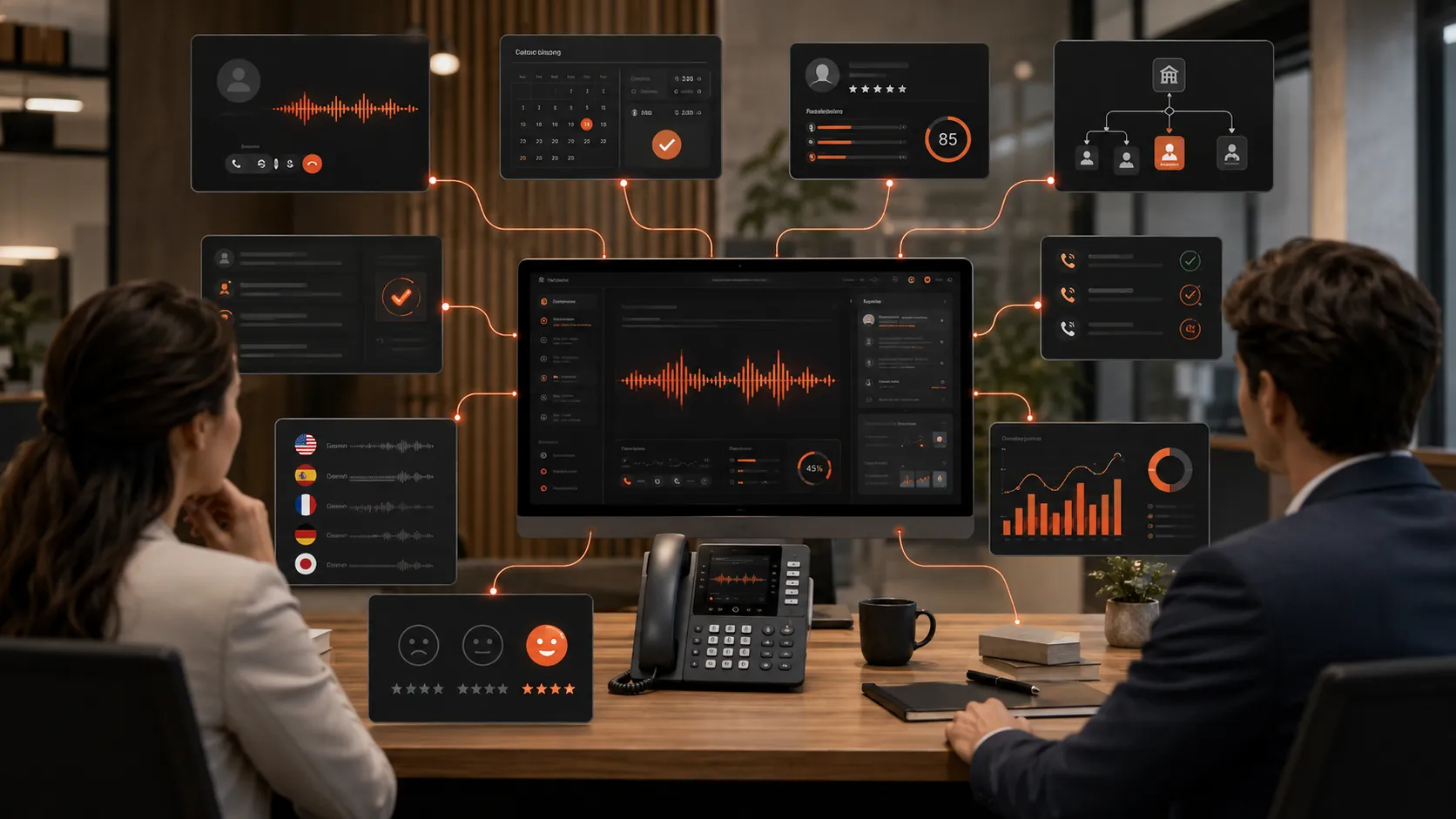
AI voice agents help businesses automate routine phone communication while maintaining a conversational experience. They can answer inbound calls, place outbound calls, collect information, qualify leads, schedule appointments, route customers, and create structured call records.
The most effective use of an AI voice agent depends on the business model, customer journey, call volume, and operational goals. It should not be added simply because artificial intelligence is popular. It should be used where it can solve a specific communication problem.
Below are some of the best use cases for AI voice agents in business communication.
What Is an AI Voice Agent?
An AI voice agent is a software-based phone assistant that can communicate with callers using natural language.
It listens to what a person says, identifies the purpose of the conversation, and responds according to approved business information and workflow rules.
Depending on the configuration, an AI voice agent can:
- Answer questions
- Collect customer details
- Check availability
- Book appointments
- Qualify sales enquiries
- Route calls
- Make follow-up calls
- Confirm bookings
- Collect feedback
- Create transcripts and summaries
- Update a calendar or CRM
Unlike a traditional telephone menu, the caller does not always need to select numbered options. The person can describe what they need in their own words, and the agent can guide the conversation accordingly.
1. Inbound Call Answering
One of the most useful applications of AI voice agents is answering incoming business calls.
Small and growing teams may not have a dedicated receptionist. Employees may be speaking with customers, attending meetings, driving between locations, or completing client work when the phone rings.
When calls are not answered, potential customers may not leave a voicemail. They may simply contact another company.
An inbound AI voice agent can answer the call immediately and ask how it can help.
It may then:
- Answer a common question
- Collect contact details
- Book an appointment
- Create a callback request
- Route the caller
- Capture a sales enquiry
- Provide approved service information
This helps businesses reduce missed opportunities and provide a more consistent first response.
2. After-Hours Call Handling
Customers do not always call during standard business hours.
A person may search for a service in the evening, request an appointment on the weekend, or call before the office opens. If the business does not respond until the next working day, the customer’s interest may decline.
An AI voice agent can provide controlled after-hours assistance.
The agent may:
- Explain current availability
- Answer basic questions
- Collect the reason for the call
- Schedule an appointment
- Record a callback request
- Provide emergency instructions approved by the business
- Explain when a human team member will respond
After-hours automation does not mean that every issue should be handled without human support. The workflow should clearly define what the AI can manage and which situations should be escalated.
3. Smart Call Routing
Traditional phone systems often require callers to listen to a menu and press a number.
This can be frustrating when the customer does not know which department is responsible for the request.
An AI voice agent can ask the caller what they need and route the call based on the response.
For example:
- A new enquiry may be sent to sales.
- A billing question may be routed to accounts.
- An existing customer may be directed to support.
- An appointment request may enter an automated booking workflow.
- A location-specific enquiry may be sent to the correct branch.
The AI can also collect useful information before the transfer. This means the employee receiving the call may already know the caller’s name, reason for calling, and relevant details.
Smart routing can reduce unnecessary transfers and help customers reach the right outcome faster.
4. Appointment Booking
Appointment scheduling is one of the strongest use cases for AI voice agents.
Businesses often spend significant time answering booking calls, checking calendars, suggesting available times, and updating customer information.
An AI voice agent connected to a supported calendar can manage much of this process during the call.
It can:
- Identify the required service
- Ask which location the customer prefers
- Check appointment availability
- Offer suitable time slots
- Confirm the selected booking
- Record customer information
- Add the appointment to the calendar
- Provide preparation instructions
This use case is valuable for clinics, consultants, salons, repair services, real estate businesses, legal offices, agencies, home-service companies, and other appointment-based operations.
Businesses interested in appointment scheduling, call routing, lead qualification, and similar workflows can review the available AI voice automation services.
5. Appointment Rescheduling and Cancellations
Booking an appointment is only one part of scheduling.
Customers may later need to move or cancel their appointments. When these requests are handled manually, employees must locate the booking, check alternative times, and update the calendar.
An AI voice agent can manage approved rescheduling and cancellation workflows.
It may ask the caller to confirm identifying details, locate the appointment, offer available alternatives, and update the schedule.
The agent can also ask whether the customer wants to reschedule before cancelling completely.
This can help the business retain bookings that may otherwise be lost.
6. Appointment Confirmations and Reminders
Missed appointments can reduce revenue and create unused staff time.
AI voice agents can make outbound confirmation or reminder calls before the scheduled appointment.
The customer may be able to:
- Confirm attendance
- Request a new time
- Cancel the booking
- Ask an approved question
- Request a callback
The outcome can then be recorded in the calendar or sent to the team.
This use case is especially helpful for businesses managing high appointment volumes or services that require preparation before the customer arrives.
7. Lead Capture
A person calling a business is often showing stronger interest than someone casually browsing a website.
An AI voice agent can turn inbound calls into structured lead records.
It may collect:
- Name
- Telephone number
- Email address
- Required service
- Location
- Preferred timeline
- Budget range
- Additional notes
- Preferred callback time
Instead of receiving an unstructured voicemail, the sales team receives organised information that can be used for follow-up.
This helps ensure that important details are not lost when employees are unavailable.
8. Lead Qualification
Not every enquiry is a suitable sales opportunity.
Some leads may be outside the service area, require an unavailable service, have an unrealistic budget, or be at an early research stage.
AI voice agents can ask approved qualification questions before a salesperson becomes involved.
The workflow may assess:
- Service fit
- Location
- Budget
- Urgency
- Company size
- Purchase timeline
- Decision-making authority
- Current solution
- Readiness to schedule a consultation
The agent can then score or categorise the lead.
High-priority prospects may be transferred to sales immediately. Other leads may be scheduled for a later follow-up or placed into a different workflow.
This allows sales teams to focus more attention on stronger opportunities.
9. Fast Follow-Up With New Leads
Lead response delays can reduce the likelihood of continuing a sales conversation.
A prospect may complete a website form and contact several businesses at the same time. If a company waits too long to respond, the person may already have booked with a competitor.
An AI voice agent can contact approved leads shortly after an enquiry is received.
It can confirm the person’s interest, ask qualification questions, and offer a suitable appointment time.
This creates a more immediate response process without requiring a salesperson to monitor every form submission.
The workflow should respect applicable consent, calling-time, and communication requirements.
10. Quote and Proposal Follow-Up
Many businesses send quotes or proposals but do not follow up consistently.
Employees may be busy with new enquiries, active customers, and operational work. As a result, potentially valuable opportunities can remain inactive.
An AI voice agent can place a structured follow-up call.
It may ask whether the prospect:
- Received the quote
- Had time to review it
- Has any basic questions
- Still needs the service
- Wants to schedule a discussion
- Would prefer a callback from a representative
This helps businesses maintain a consistent follow-up process while allowing salespeople to focus on prospects who are ready for a detailed conversation.
11. Customer Re-Engagement
Businesses often have previous customers and older leads who have not been contacted recently.
Some of these people may still need the service, require a renewal, or be interested in a new offer.
AI voice agents can support approved re-engagement campaigns.
The agent may ask whether the person:
- Still needs assistance
- Wants to schedule another service
- Is interested in a relevant update
- Would like to speak with a team member
- Has changed their requirements
This can help businesses generate additional opportunities from existing relationships rather than relying only on new lead generation.
12. Customer Feedback Calls
Customer feedback can help a business improve its services, but manually calling every customer may not be practical.
An AI voice agent can conduct a short post-service feedback conversation.
It may ask:
- How satisfied were you with the service?
- Was the appointment completed as expected?
- Did the team answer your questions?
- Is there anything we could improve?
- Would you like a manager to contact you?
Responses can be summarised, and negative experiences can be flagged for human review.
This allows businesses to collect feedback more consistently and identify recurring issues.
13. Customer Satisfaction and NPS Surveys
AI voice agents can also support structured customer satisfaction or Net Promoter Score surveys.
The voice format may be more accessible for customers who are unlikely to complete an email survey.
The agent can ask a small number of approved questions and record the answers.
For example, it may ask how likely the customer is to recommend the business and then request a short explanation.
The business can review the results by service, location, or time period.
Survey calls should remain concise and provide a clear option to end the conversation.
14. Frequently Asked Questions
Businesses receive many repetitive questions.
Customers may ask about:
- Opening hours
- Service locations
- Basic pricing
- Appointment availability
- Required documents
- Service eligibility
- Delivery timelines
- Cancellation rules
- Payment methods
- Contact information
An AI voice agent can answer approved frequently asked questions consistently.
This reduces interruptions for employees and allows customers to get simple information quickly.
The agent should not invent responses. When the required information is unavailable or the question needs professional judgment, it should transfer the call or create a callback request.
15. Customer Support Triage
AI voice agents can assist with the first stage of customer support.
Instead of immediately transferring every caller, the agent can identify the issue and collect relevant information.
It may ask:
- Which product or service is involved?
- When did the issue begin?
- Is the service currently unavailable?
- Have you already tried a recommended step?
- What is the relevant order or account reference?
- How urgent is the problem?
The system can then route the case to the correct person or department.
Simple issues may be resolved using approved support information, while complex problems are escalated.
This can reduce support queue pressure and give human agents more context before they begin the conversation.
16. Order Status and Service Updates
Customers frequently call businesses to ask for updates.
Depending on the connected systems and available data, an AI voice agent may provide approved information about:
- Order status
- Appointment status
- Service scheduling
- Delivery windows
- Application progress
- Callback requests
- Support-ticket status
This use case can reduce repetitive status enquiries.
However, the system should verify the caller appropriately before sharing personal or account-specific information.
17. Multilingual Customer Communication
Businesses serving customers from different language backgrounds may struggle to provide consistent phone support.
Hiring separate staff for every supported language may not be realistic.
A multilingual AI voice agent can communicate in several configured languages, depending on the selected technology.
This can support:
- Customer enquiries
- Appointment booking
- Lead qualification
- Appointment reminders
- Feedback calls
- Basic support triage
The language workflow should be professionally reviewed and tested. Direct translation without considering local expressions, pronunciation, and customer expectations may create a poor experience.
18. Multi-Location Call Management
Companies with several locations often need to route calls based on geography, service availability, or branch responsibilities.
An AI voice agent can ask which location the caller needs or identify the relevant branch from the request.
It may then:
- Provide location-specific information
- Check the correct calendar
- Route the call to the appropriate team
- Book at the nearest available location
- Record branch-specific call outcomes
This helps multi-location businesses create a more unified phone experience while preserving local workflows.
19. Seasonal and High-Volume Call Support
Some businesses experience sudden increases in call volume during specific seasons, promotions, events, or emergencies.
Hiring and training temporary staff for a short period can be difficult.
AI voice agents can help absorb routine call volume during these peaks.
They may answer common questions, collect enquiries, provide updates, or manage appointment requests.
The business should plan capacity and workflows before the busy period begins. A call agent designed during a crisis may not be as effective as one tested in advance.
20. Call Recording, Transcription, and Summaries
AI voice agent systems can provide structured records of conversations when recording and transcription are enabled appropriately.
These records may include:
- Full transcripts
- Short conversation summaries
- Caller details
- Call outcome
- Appointment information
- Qualification answers
- Follow-up requirements
- Escalation reasons
Searchable call records can make it easier for teams to find information, review customer interactions, and understand common communication issues.
Businesses must ensure that recording, disclosure, consent, retention, and data-handling practices comply with applicable requirements.
21. Call Quality Monitoring
Businesses can use AI voice workflows to create a more consistent call-handling process.
Calls may be reviewed against standards such as:
- Was the caller greeted correctly?
- Was the required information collected?
- Was the appointment confirmed?
- Was the call transferred appropriately?
- Was the customer’s request resolved?
- Were required disclosures provided?
Quality monitoring can identify weaknesses in scripts, knowledge bases, routing logic, or customer journeys.
The goal should be continuous improvement rather than simply increasing the number of automated calls.
22. Performance and ROI Reporting
AI voice agents can provide useful call data that is difficult to capture consistently with manual processes.
Businesses may track:
- Total calls
- Answer rates
- Call outcomes
- Qualified leads
- Appointments booked
- Transfers to staff
- Frequently asked questions
- Customer feedback
- Average call duration
- Cost per call
- Conversion trends
These insights can help management understand which workflows are effective and where changes are needed.
For example, a high number of callers abandoning the process at the same question may indicate that the script needs improvement.
Which Use Case Should a Business Start With?
A business does not need to automate every call workflow at once.
The best starting point is usually the communication problem creating the greatest operational cost or customer frustration.
A company may begin with inbound call answering when it misses too many enquiries.
An appointment-based business may start with booking and reminder calls.
A sales team may prioritise new-lead follow-up and qualification.
A support-heavy business may begin with routing and issue triage.
The starting workflow should be:
- Repetitive
- Easy to define
- High enough in volume to justify automation
- Measurable
- Suitable for clear escalation rules
- Based on accurate business information
Once the first workflow is tested and improved, additional use cases can be introduced.
AI Voice Agents and Human Teams Work Best Together
AI voice agents are most effective when they support human employees rather than attempt to remove them from every conversation.
The AI can manage high-volume, repetitive, and structured interactions.
Human team members can focus on:
- Complex support cases
- Sensitive situations
- Negotiation
- Relationship building
- Custom recommendations
- Complaints
- Professional judgment
- High-value sales conversations
The workflow should always provide a suitable path to human support.
A caller may need to be transferred when the person requests an employee, becomes frustrated, asks an unexpected question, or requires help beyond the AI agent’s approved scope.
Important Compliance Considerations
Businesses remain responsible for using AI voice agents lawfully and responsibly.
Depending on the call type, location, industry, and customer relationship, requirements may apply to:
- Consent
- Telemarketing
- Do Not Call lists
- Opt-out requests
- Permitted calling hours
- Automated voice disclosures
- Caller identification
- Call recording
- Data protection
- Contact-list sourcing
- Marketing claims
- Sensitive information
Outbound marketing calls may be subject to different or stricter requirements than inbound customer-service calls.
Businesses should define compliance instructions before a workflow is deployed and obtain qualified advice where necessary.
Choosing the Right AI Voice Agent Setup
The best setup depends on the number of workflows, monthly call volume, required languages, integrations, and business structure.
A small team may need only inbound answering and appointment booking.
A growing company may require several workflows for qualification, follow-up, reminders, and support.
A larger or multi-location operation may need:
- Higher call capacity
- Multiple languages
- CRM integration
- Calendar integration
- Advanced routing
- Detailed reporting
- Ongoing optimisation
- Separate workflows for each department or location
CallAutomateAI provides different options based on call volume and workflow requirements. Businesses can compare the available AI voice agent pricing plans.
Final Thoughts
AI voice agents can support many areas of business communication, but the best use cases are those built around clear and repeatable customer interactions.
They can answer incoming calls, schedule appointments, qualify leads, follow up with prospects, confirm bookings, collect feedback, route customers, support multiple languages, and create structured call records.
The value comes from improving how communication is managed.
Customers receive faster responses and clearer next steps. Employees spend less time on repetitive phone tasks. Sales teams receive better-qualified opportunities. Managers gain more visibility into call outcomes.
A successful AI voice agent should be based on real business processes, accurate information, careful testing, and clear human escalation rules.
When implemented strategically, it can become an important part of a company’s communication infrastructure rather than simply another automated tool.
To discuss the most suitable AI voice agent use cases for your business, visit the Get a Quote page or contact CallAutomateAI.