
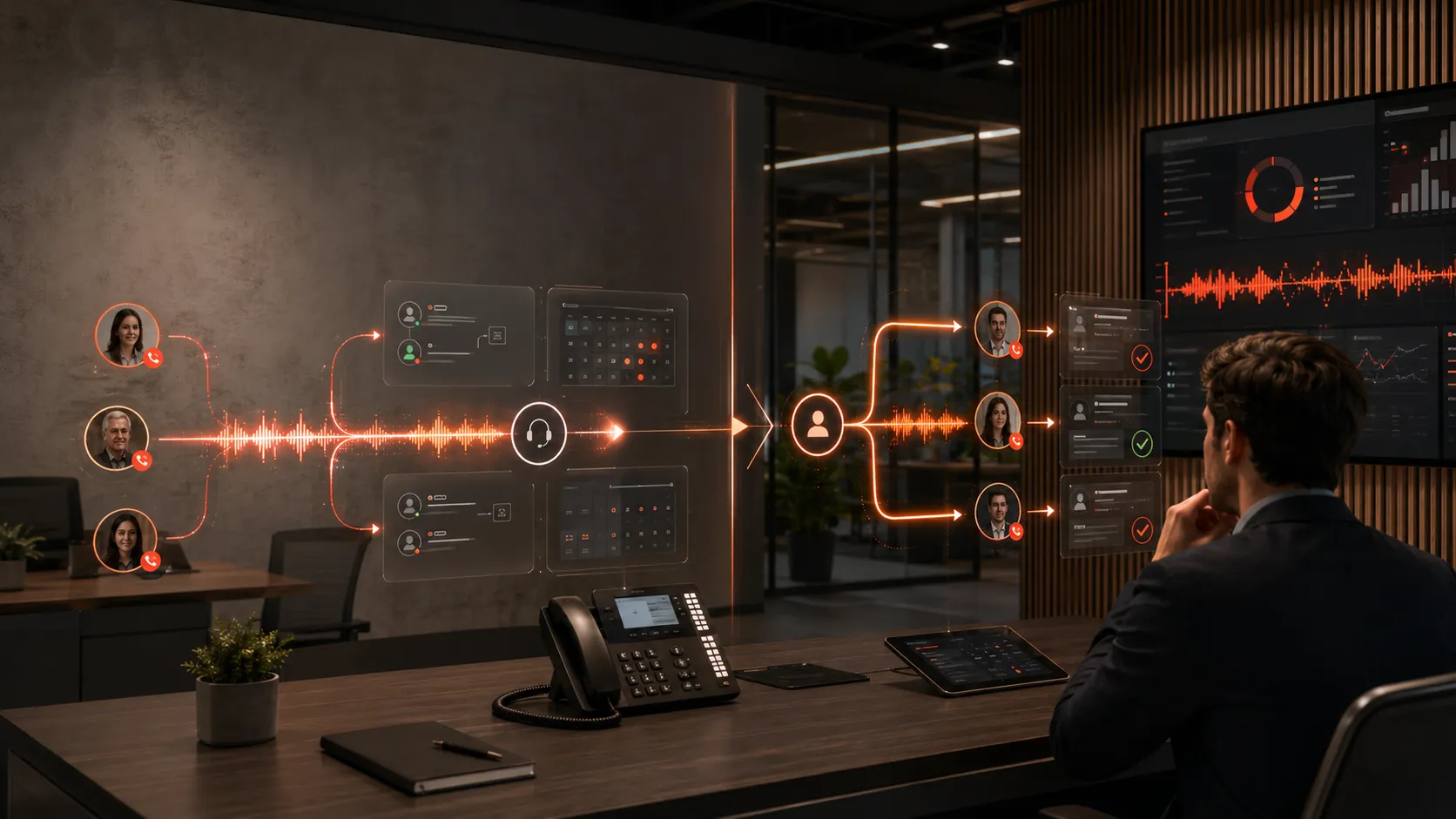

Phone calls remain one of the most important communication channels for businesses. Customers call when they need answers, want to schedule an appointment, require support, or are ready to make a purchase. Sales teams also depend on outbound calls to contact leads, follow up with prospects, reconnect with past customers, and confirm appointments.
The problem is that traditional call handling requires significant time, staffing, and coordination. Calls may arrive outside business hours, employees may be busy helping other customers, and sales representatives may spend hours calling people who are not ready to buy. Missed calls, delayed follow-ups, and inconsistent customer experiences can cause valuable opportunities to disappear.
AI voice agents help solve these problems by automating both inbound and outbound business calls. They can answer questions, qualify leads, route callers, schedule appointments, conduct follow-ups, and record useful information without requiring a human employee to manage every conversation.
Unlike traditional recorded phone menus, modern AI voice agents are designed to understand natural conversations. Callers can explain what they need in their own words instead of pressing buttons or navigating a long menu. The AI can then respond, collect information, complete an action, or transfer the caller to the appropriate person.
What Is an AI Voice Agent?
An AI voice agent is a software-based calling assistant that communicates with people over the phone using natural language.
It combines technologies such as speech recognition, conversational artificial intelligence, voice generation, workflow automation, and business software integrations. These technologies allow the system to listen to a caller, understand the request, respond naturally, and complete an appropriate action.
An AI voice agent can be configured around a company’s actual processes. For example, it can answer frequently asked questions, check service availability, collect contact details, qualify a sales enquiry, book an appointment, update a CRM, or transfer a caller to a team member.
The same technology can also make outbound calls for approved business purposes, such as following up with leads, confirming appointments, collecting customer feedback, or reconnecting with inactive customers.
This makes AI voice agents useful for businesses that receive frequent calls, manage high lead volumes, operate across multiple locations, or need more consistent customer communication.
How AI Voice Agents Improve Inbound Calling
Inbound calls are initiated by customers, prospects, vendors, or other people trying to contact a business. These calls often represent immediate interest or an urgent need. A person calling a company may be ready to book, purchase, request support, or ask a question before making a decision.
An unanswered inbound call can therefore become a lost opportunity.
Answering Calls Consistently
An AI voice agent can answer incoming calls according to the business rules and call flows created for the company. It does not become unavailable because a receptionist is already speaking to another caller or because the office is experiencing a sudden increase in call volume.
This helps businesses provide a more consistent first response. Every caller can receive an appropriate greeting, relevant questions, and a clear next step.
For small teams, this can reduce pressure on employees who are trying to handle customers, administrative work, and phone calls at the same time.
Reducing Missed Opportunities
Many callers will not leave a voicemail or call repeatedly when their first attempt is unanswered. They may simply contact another business.
AI voice agents can reduce this risk by providing an immediate response. Depending on the configured workflow, the agent can capture the caller’s information, answer common questions, schedule an appointment, or arrange a callback.
This is especially useful for home services, medical clinics, real estate agencies, insurance businesses, automotive services, legal offices, hospitality companies, and other businesses where phone enquiries frequently turn into appointments or sales.
Providing Smarter Call Routing
Traditional phone menus require callers to select from predefined options. These menus can be frustrating when the caller is unsure which department they need.
An AI voice agent can ask the caller what they need and use the response to determine the correct destination. A sales enquiry can be transferred to the sales team, an existing customer can be routed to support, and an appointment request can be handled through an automated booking workflow.
This approach can reduce unnecessary transfers and help callers reach the right outcome faster.
Automating Appointment Booking
Scheduling is one of the most valuable uses of inbound AI calling.
The voice agent can ask what service the caller needs, check availability through a connected calendar, suggest suitable appointment times, and confirm the booking during the conversation. It can also be configured to help callers reschedule or cancel existing appointments.
Automated booking reduces the number of back-and-forth calls required to find an available time. It also allows employees to focus on delivering the service rather than manually managing every scheduling request.
Answering Frequently Asked Questions
Businesses often receive the same questions repeatedly:
- What are your opening hours?
- Which locations do you serve?
- How much does a service cost?
- Do you offer weekend appointments?
- What should I bring to my appointment?
- How quickly can someone contact me?
An AI voice agent can be trained using approved business information so that it can answer these questions consistently. When a question requires human judgment or falls outside the available information, the call can be transferred or escalated.
Businesses exploring these capabilities can review the available AI voice automation services offered by CallAutomateAI.
How AI Voice Agents Improve Outbound Calling
Outbound calling involves a business contacting prospects, customers, or leads. It can support sales, appointment management, customer retention, feedback collection, and service updates.
Manual outbound calling can be difficult to scale because it requires employees to dial numbers, wait for answers, repeat similar information, update records, and follow up multiple times.
AI voice agents can automate many of these repetitive tasks while allowing human representatives to focus on conversations that require negotiation, expertise, or personal attention.
Faster Lead Follow-Up
The speed of a response can strongly influence whether a lead continues the conversation. When someone submits an enquiry, waiting several hours or days for a call may reduce their interest.
An AI voice agent can be configured to contact new leads shortly after an enquiry is received. It can introduce the business, confirm the person’s interest, ask qualifying questions, and determine the appropriate next step.
Qualified prospects can then be transferred to a sales representative, added to a booking calendar, or placed into a follow-up workflow.
Automated Lead Qualification
Not every lead has the same needs, urgency, budget, or purchase intent. Sales teams often spend considerable time calling people who are not a good fit.
AI voice agents can ask a consistent set of qualification questions during an outbound conversation. Depending on the business, these questions may cover:
- The service the prospect requires
- Their preferred timeline
- Their location
- Their budget range
- Their current provider
- Their level of interest
- Their preferred appointment time
The collected information can be used to score or categorise the lead. Sales representatives can then prioritise people who are more likely to move forward.
Re-Engaging Previous Customers
Businesses often have lists of previous customers or inactive leads who have not been contacted recently. Calling each person manually may not be practical.
An AI-powered win-back campaign can reconnect with these contacts, share an approved offer, ask whether they still need assistance, or invite them to schedule a conversation.
This can help a business generate additional value from existing customer relationships rather than depending only on new lead generation.
Appointment Confirmations and Reminders
Missed appointments can create lost revenue and unused staff time.
AI voice agents can place reminder calls before an appointment, confirm whether the customer will attend, and provide options to reschedule when necessary. The outcome can then be recorded in the business calendar or another connected system.
Consistent reminders are particularly helpful for clinics, consultants, salons, home-service providers, real estate professionals, and other appointment-based businesses.
Customer Feedback Calls
Post-service feedback provides useful information, but employees may not have time to call every customer.
An AI voice agent can conduct a short feedback conversation after a service is completed. It can ask approved questions, record the responses, identify common concerns, and flag dissatisfied customers for human follow-up.
This gives the business a more structured way to understand customer experiences and identify areas for improvement.
Connecting Voice Agents With Business Tools
An AI voice agent becomes more useful when it is connected to the systems a business already uses.
Calendar integration allows the agent to view availability and book appointments. CRM integration can help store caller details, update lead stages, and create follow-up tasks. Call transcripts and outcome data can make conversations easier to review and search.
Businesses can also monitor information such as:
- Total calls handled
- Answer rates
- Qualified leads
- Appointments booked
- Call outcomes
- Common customer questions
- Transfers to human representatives
- Cost per completed call
- Conversion trends
These insights can help a company improve scripts, adjust routing rules, and understand where callers encounter problems.
AI Voice Agents Support Teams Rather Than Simply Replacing Them
The most effective use of AI calling is not to remove human interaction from every situation. It is to automate routine conversations and create a better division of work.
AI voice agents can manage repetitive tasks, gather initial information, answer standard questions, and handle high call volumes. Human team members can then focus on complex support issues, sensitive conversations, negotiations, and high-value sales opportunities.
A properly designed workflow should also include clear escalation rules. When a caller requests a person, becomes frustrated, asks an unexpected question, or requires specialised assistance, the system should transfer or flag the conversation appropriately.
What Businesses Should Consider Before Getting Started
Successful AI calling requires more than selecting a voice and uploading a script. The workflow should reflect the actual customer journey.
Before implementation, a business should identify:
- Why people usually call
- Which calls should be automated
- Which situations require a human
- What information the agent can provide
- What data needs to be collected
- Which calendar or CRM should be connected
- How unsuccessful calls should be handled
- What consent, disclosure, recording, and calling rules apply
The agent should also be tested using realistic conversations before it is fully deployed. Questions, objections, background noise, different accents, and unusual requests should be considered during testing.
Call flows can then be reviewed and improved as real conversation data becomes available.
Choosing the Right AI Calling Solution
The right setup depends on the company’s call volume, number of workflows, required languages, integrations, and business goals.
A small business may begin with inbound answering and appointment booking. A growing team may need lead scoring, multiple workflows, and calendar synchronisation. A high-volume or multi-location operation may require unlimited workflows, CRM integration, advanced reporting, and ongoing optimisation.
CallAutomateAI offers flexible options for different call volumes and automation requirements. Businesses can compare the available AI voice agent pricing plans or request a solution based on their specific workflow.
Final Thoughts
AI voice agents can improve inbound and outbound calling by making business communication faster, more consistent, and easier to scale.
For inbound calls, they can answer enquiries, route callers, book appointments, and reduce missed opportunities. For outbound calls, they can follow up with leads, qualify prospects, confirm appointments, reconnect with customers, and collect feedback.
The greatest benefit comes from combining automation with clear workflows and appropriate human support. Routine calls can be handled efficiently, while important or complex conversations can still reach experienced team members.
A business considering AI call automation should begin by identifying where calls are being missed, where employees are repeating the same tasks, and where slow follow-up is affecting customers or sales.
To discuss a tailored inbound or outbound calling workflow, submit your requirements through the Get a Quote page or contact the CallAutomateAI team.